• About

    I write a fortnightly "Letter from India" column for the International Herald Tribune, and occasionally for The New York Times

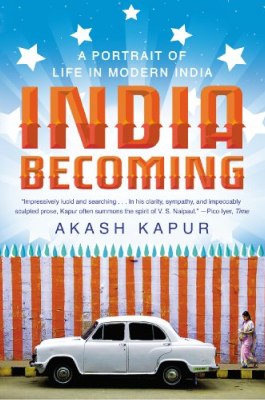
    I'm working on a non-fiction book about India, to be published by Riverhead in 2010

    I've written for The Atlantic, The Economist, Granta, The New York Times Book Review, The New Yorker, and several other publications

  • Subscribe to my blog

  • Highlights

    Two articles on the five-year anniversary of the tsunami (1, 2), from The International Herald Tribune and The New York Times. These follow-up from my two original reports on the tsunami, published in The New Yorker (1, 2).

    See also a related article from Granta on coastal erosion in South India.

    Two articles on the social impact of rapid development, from The International Herald Tribune and The New York Times (1, 2).

    I've also written on development for The Atlantic (an essay review on Amartya Sen ) and The Economist (on the digital divide).

    I've written several literary essays and reviews over the years. See this one on VS Naipaul, from Transition, and this one on Indian literature, from The New Statesman.

Agriculture Left to Die at India’s Peril

Friday, January 29th, 2010

Letter from India, The International Herald Tribune

Agriculture in this area, and in much of India, is dying. The village economy is in crisis, assailed by migration to the cities, decades of ecological neglect, and the growing unsustainability of farming.

Since the late ’90s, when agriculture represented more than a quarter of the nation’s G.D.P., its share has dipped to just over 16 percent. Over the last five years, the Indian economy as a whole has grown more than three times as fast as agriculture. The trend is clear: agriculture is being squeezed out of the new India.

Earlier this week, President Pratibha Patil called for “a second green revolution” to stem spiraling food prices and declining supplies. Such calls have emotional resonance in a country that still remembers the humiliation of American food aid in the 1960s. It’s not clear, however, how Ms. Patil’s goal can be achieved. The forces arrayed against Indian farming are formidable; they are part of the country’s great leap toward modernity.

A Test Ahead for India’s Defiant Optimism

Sunday, January 17th, 2010

Letter from India, The International Herald Tribune

As we enter the second decade of the millennium, I feel a tremendous sense of anticipation in the nation: Is this the decade when India will finally achieve its potential?

The past 10 years have been marked by substantial excitement — and more than a little hype — over the nation’s possibilities. But over the next 10 years, rhetoric will meet reality. The question is whether rhetoric will bump up against reality, or whether reality will finally match the rhetoric.

India has always been a country of contrasts, but there is something particularly striking about the gulf these days between those who have benefited from the fruits of economic reform and those left out. At times, it has felt like the past decade was one big party — with only half the nation invited.

Sometime over the next 10 years, I suspect within the next five, we will know whether India can live up to its own expectations — whether achievements will match words, and whether the nation’s self-confidence will prove prophetic or mere bravado. Either way, as we move from rhetoric to reality, the coming decade promises to be a lot more complicated than the one that has just passed.

In Tsunami’s Wake, an Unexpected Second Chance

Monday, January 11th, 2010

A version of my first article on the tsunami’s aftermath ran in the Week in Review section of The New York Times.

http://www.nytimes.com/2010/01/03/weekinreview/03kapur.html

Aid Money Brings a New Social Order

Friday, January 1st, 2010

Letter from India, The International Herald Tribune
Part two of a two-part series

The social transformation Kannan described — and that I saw all along the coast — never comes easily. When one group rises, other groups get jealous. As the conflict over the crabs suggests, rival castes fight to protect their interests. For all the progress communities around here have seen over the last five years, they have also seen violence and social disruption.

Such conflict is probably inevitable. Development is a disruptive process, and the money that has poured like a second tsunami over this stretch of the coast — more than $1 billion, by some estimates — has swept into complex societies that had remained essentially unchanged for centuries, perhaps even millennia.

In a way, what’s happening around here is simply another version of what’s happening across India. As I have driven along the coast over the last few weeks, I have come up against familiar sights: rapid transformation, a new order in which there are many winners and fewer losers, and a sense of traditional societies bending, cracking, and in some cases breaking under the strain of new money.

Changed Forever by Disaster

Friday, January 1st, 2010

Letter from India, The International Herald Tribune
Part one of a two-part series

Five years ago, I woke up on a Sunday morning, checked the news online and saw that a tsunami had hit my part of the world. Early reports were sketchy. I read about just a few casualties (in Sri Lanka, as I recall), and I remember thinking that the whole thing sounded exciting.

I went down to the beach, about a 15-minute drive from my house. I walked the sand. I saw a crowd of villagers standing in a circle. They were looking down at something. It was a dead boy.

I knew at that moment that this wasn’t exciting. I was witness to a horrible tragedy.

In the weeks and months that followed, as the full, almost unimaginable scale of the tragedy became apparent — more than 200,000 dead across Asia, and almost 8,000 here in the southeastern state of Tamil Nadu — I returned again and again to the coast. Signs of devastation were everywhere: in the thatch and cement debris tossed far inland, in the village schools and temples crowded with refugees, and in the ambulances and hearse vans that drove up and down the East Coast Road.

Interview with Chidambaram

Friday, December 4th, 2009

A fascinating–and serious, and thoughtful–interview with the Indian Finance Minister, P. Chidambaram, that recently ran in Tehelka. I’ve rarely seen such in-depth and engaged (and apparently sincere) conversation between a politician and a journalist in an Indian publication–or, in fact, any publication. It touches on many of the most serious problems confronting India at the moment.

From Places of the Heart, a New Order

Thursday, December 3rd, 2009

Letter from India, The International Herald Tribune

To an outsider, those alleys have little meaning: They’re just a jumble of houses and satellite dishes and stray dogs and kids playing in mud. But Molasur is, in fact, highly organized. The village layout is a reflection of society — and, now, of a social order that’s disappearing.

For Sathy, Molasur’s layout represents stability, a form of continuity with the past. Sometimes, when he talks about his village, I feel that its geography gives his life a framework. As that geography changes, he seems to be questioning his own place in the world.

Growing, Yes, but India Has Reasons to Worry

Thursday, December 3rd, 2009

Week in Review, The New York times

Accompanying Graphic: Looking Outward at Trouble on Many Sides

For all the talk of a new era of Indo-American collaboration, Americans tend to view India through the narrow prisms of two shared concerns — a battle against Islamic extremists, and the benefits of international trade. But India is a complicated country in a complex part of the world — buffeted by internal insurgencies, surrounded by hostile neighbors, marginalized until recently as underdeveloped.

India’s Path Was Paved by Soviet Fall

Friday, November 27th, 2009

Letter from India, The International Herald Tribune

The breakup of the Soviet Union had a profound impact on India. In many ways, it paved the way for a reinvention of the country: from a stultified, socialist economy to a more dynamic, capitalist one; from a foreign policy defined by suspicion of America to one defined by shared interests and even mutual affection; and from public attitudes that frowned on individualism, consumerism and ambition to a nation that today exalts those same qualities.

Most important, the death of Communism had a psychological and intellectual impact that paved the way for India’s transformation. As the economist T.N. Srinivasan (among others) has argued, it provided an opening for would-be reformers, who had already recognized the need for some form of liberalization but who had run up against ideological resistance.

The collapse of the Soviet Union wasn’t just the collapse of a political and military behemoth. It was the collapse of an idea, too, and with the discrediting of Communist ideology, Indian socialism, long the guiding philosophy of statecraft and economic policy making, confronted a crisis of confidence. Ideas that had until then been anathema to the nation’s governing class — ideas about markets, about profits, about entrepreneurship — suddenly seemed, amidst the detritus of Communism, to be incontestable.

Exchanging One Cliché for Another

Thursday, November 5th, 2009

Letter from India, The International Herald Tribune

When I moved to America in the early 1990s, India was little more than a cipher in the American imagination. Many of my new friends were uninterested in and uninformed about the country that I desperately missed. India was defined by the broadest, and usually most unflattering, of brush strokes — stereotypes about poverty and corruption, images of crowds, maybe a vague sense of what Indians in America used to call the “three C’s”: caste, cows and curry.

I’ve been thinking about those early years in America, because I just spent a few weeks back in the country, in New York. Every time I return these days, I’m struck by the extent to which the gulf of incomprehension has narrowed. Most of all, I’m struck by the new optimism and enthusiasm that seem to have attached themselves to India, and especially to its economic prospects.